Garbage In, At Machine Speed
AI automation doesn't fix your messy spreadsheet. It mails it to your customers, fast, in a confident voice.
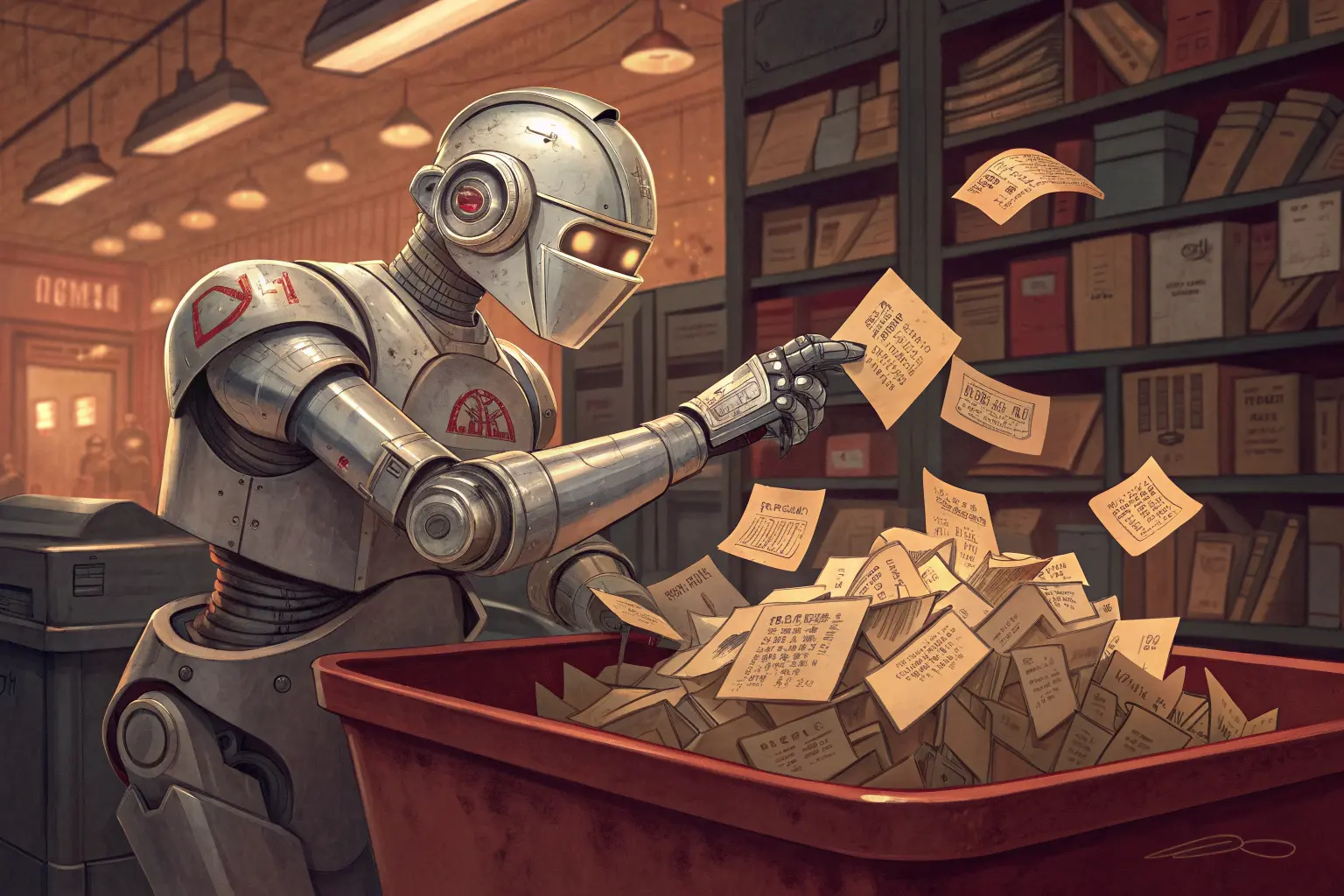
Every automation demo I have ever watched runs on five clean records. The vendor types in a name, the bot writes a flawless quote, the room nods. Nobody in that room asks the only question that matters: what happens when you point this thing at the actual list, the one with a customer entered three times under two spellings and a phone number sitting in the email field? I build these systems for small businesses, so let me say the part the vendor won't. AI automation does not fix your messy data. It executes it, fast, in a confident voice, in front of your customers.
Garbage in, garbage out has been true since the first computer booted up. What changed is the speed and the costume. A human looking at a bad record hesitates. Wait, didn't I already email her? That half-second of doubt is the only quality control a five-person shop has ever had. It is free, it is invisible, and automation deletes it. The machine does not hesitate. It sends.
I built a quoting and follow-up system for a window cleaning company I work with. The logic was fine. The data was a decade of a guy running his business out of his head and a spreadsheet he filled in between jobs. The same customer appeared under "Bob," "Robert," and "Bob + wife." Half the addresses had no zip. A single column named "notes" was quietly doing the work of six proper fields. Point an automation at that and it does not see a mess. It sees rows. It mailed one man two different quotes for the same job, because to the system he was two different people. That is not an AI failure. The AI did exactly what it was told. The spreadsheet lied to it.
The automation didn't break. It worked perfectly, on a lie.
Here is the cost that never makes it into the proposal. Before any of this can run, somebody has to clean the data. De-duplicate the contacts. Standardize the addresses. Make the human call that Bob and Robert are one person. That is not an afternoon. On a real small-business list it is a week, sometimes two, and it is tedious, and it is the least impressive part of the entire project. Which is exactly why the vendor does not do it and did not mention it. It is your mess, and cleaning a mess does not demo well.
The demo data is clean because the vendor built it to be clean. Five records, one spelling each, every field filled, no contradictions. It is a stage set. Your data is a garage that eleven years of actual work got shoved into. The gap between the stage set and the garage is the whole project, and they priced you for the stage set.
Scale is what turns an annoyance into a problem. A person working a bad list makes a few mistakes a day and catches most of them before they leave the building. An automation working that same list makes every mistake at once, at two in the morning, to everyone, and the first you hear of it is a customer calling to ask why he got quoted twice, or why you called him Robert when his name is Bob and he has corrected you for nine years. The small errors that used to die quietly in a drawer now go straight to the people who sign your invoices.
So before you sign anything, ask the vendor one question and watch their face. Who cleans my data, and is it in this price? If they tell you the tool handles it, they are selling you the stage set. If they go quiet, you just found the real scope of the job, the part that was going to land on your desk in week three with no warning. Then do the smaller version of their work yourself first. Open your own list and ask how many of these records you would trust a stranger to act on without checking. That number is your actual starting line. Not the demo.
The uncomfortable truth is that the AI is the easy part now. The models are good. The wiring is a solved problem. The thing standing between a small business and automation that actually helps is almost never the intelligence. It is ten years of data that only ever made sense to one person, held together in a file nobody else can read. Automate that as-is and you have not bought a robot. You have bought a very fast, very confident way to be wrong at everyone at once.
Clean your list first. The machine believes every word of it.