Stop Calling It a Hallucination. It's Just Wrong.
Every other industry calls a product that returns false answers defective. AI got to name the defect something pretty.
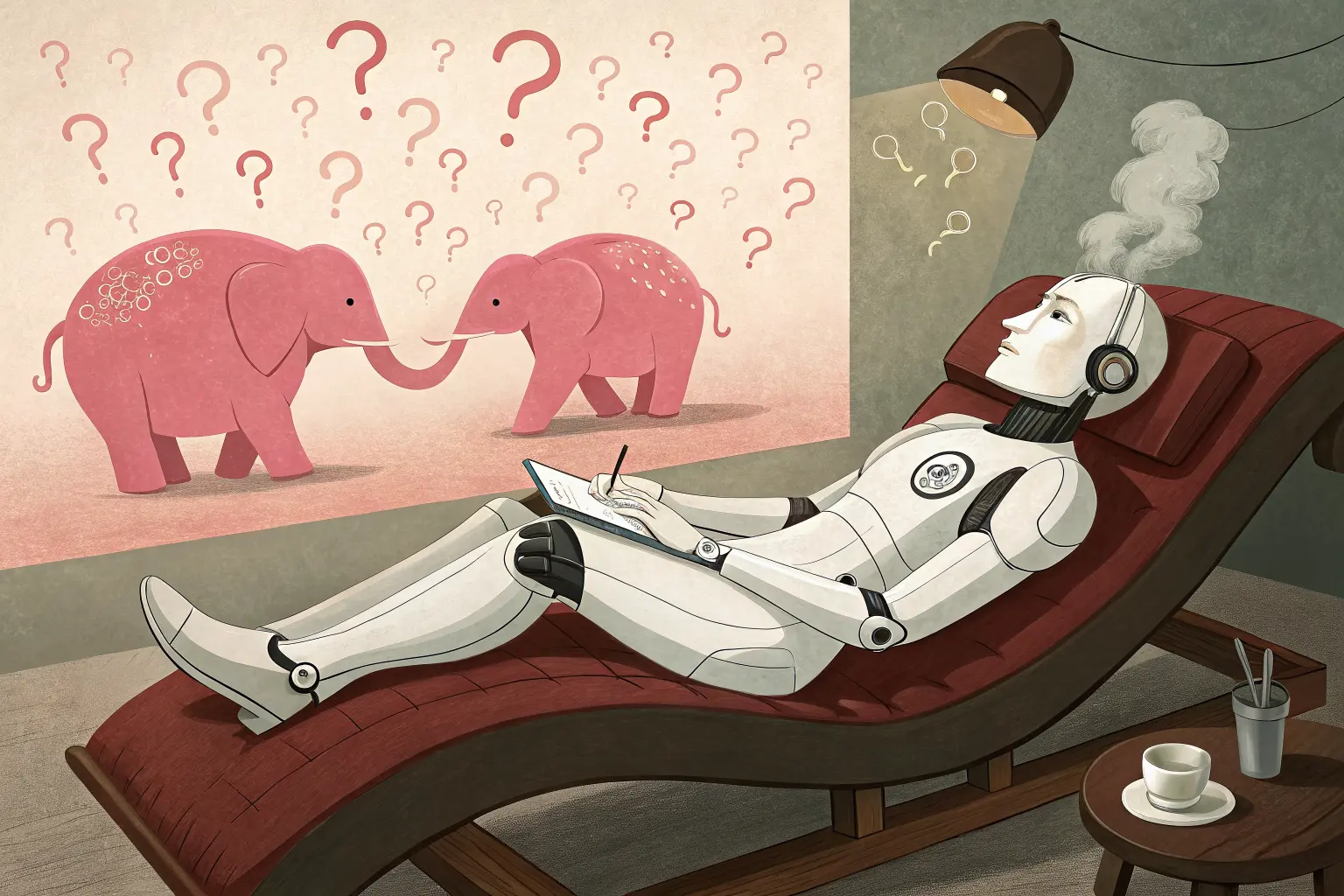
Somebody in a marketing meeting earned a bonus the day the industry agreed to call it a "hallucination." It is the single best piece of branding tech has produced this decade, and almost nobody clocks it as branding. When a language model states, with total confidence, a fact that is flatly false, we do not say it broke. We do not say it lied. We say it hallucinated, the way you might describe a poet or a fevered saint, and just like that a reliability defect became a quirky little personality trait.
Think about what that word smuggles in. Hallucination implies a mind. It implies something that normally perceives reality correctly and, on this one unfortunate occasion, saw a pink elephant that was not there. It implies the model has a baseline of truth it usually hits and only sometimes slips off of. None of that is what is happening. The model is doing the exact same thing when it is right and when it is wrong: predicting the next likely stretch of text. There is no truth mode and no dream mode. There is one mode. Sometimes the statistically plausible sentence happens to be true, and sometimes it happens to be false, and the machine cannot tell the difference because telling the difference was never part of the job.
So it is not misperceiving. It is functioning normally. A wrong answer is not a glitch in the system. It is the system.
If your calculator returned 54 for seven times eight, you would not say it hallucinated. You would return it.
Notice that nobody else on earth gets this word. A bridge that fails is not expressing itself. A car that surges on its own is a recall and a congressional hearing. A drug that does the wrong thing is an adverse event with lawyers attached. Every mature industry has a vocabulary of accountability, and every one of those words points a finger back at the maker. "Defective." "Failure." "Fault." AI reached into the thesaurus and pulled out a word that points nowhere. The model hallucinated. Passive, dreamy, nobody's fault, an act of God performed by a product you paid for.
And that is the actual work the word does. It moves the liability off the vendor and onto reality itself. In 2023 a New York lawyer filed a federal brief stuffed with court cases that did not exist, because ChatGPT invented them, complete with quotes and citation numbers, and delivered them in the same flat confident tone it uses for real ones. He got sanctioned. The cases were described everywhere as hallucinations. But the software did precisely what it was built to do. It produced text shaped like a legal citation. It has no idea what a court is. Calling that a hallucination lets the tool off the hook and lets the buyer believe he was betrayed by a rare event, rather than sold a confident guesser with a beautiful voice.
Then comes the second move, the one that should really get your attention. Once we accept the word, the fix becomes your problem. "Always verify AI outputs." You have read that sentence a hundred times. Sit with how insane it is as a product standard. Imagine a GPS that routes you correctly most of the time and, when you buy it, hands you a card that says please independently confirm every turn against a paper map. That is not a navigation device. That is a suggestion generator with a disclaimer. We would never tolerate it from a GPS, but we tolerate it from a system we are being told will run our companies, because the pretty word taught us to grade on a curve.
There is even a flattering little myth attached now. Hallucination as the price of creativity, the model's imagination running hot, the same wild spark that lets it write you a poem is what makes it occasionally fib. Convenient. It reframes unreliability as the tax you pay for genius, which means the defect is not a defect at all, it is evidence of how alive the thing is. That is not an engineering explanation. That is a horoscope.
I am not saying the technology is useless. I use it every day and it earns its keep. I am saying watch the language, because the language is doing something to you. When a vendor tells you their system occasionally hallucinates, hear the sentence underneath: our product returns false information as confidently as true information, and we cannot reliably tell you which is which, and we have given that a word soft enough that you will keep paying anyway.
It is not seeing things. It is not dreaming. It is confidently, fluently wrong, and we handed being wrong such a lovely name that nobody upstream ever has to fix it.