Nobody Sells You the Alarm
The automation that ruins your week isn't the one that crashes. It's the one that keeps running with a green light and quietly does nothing.
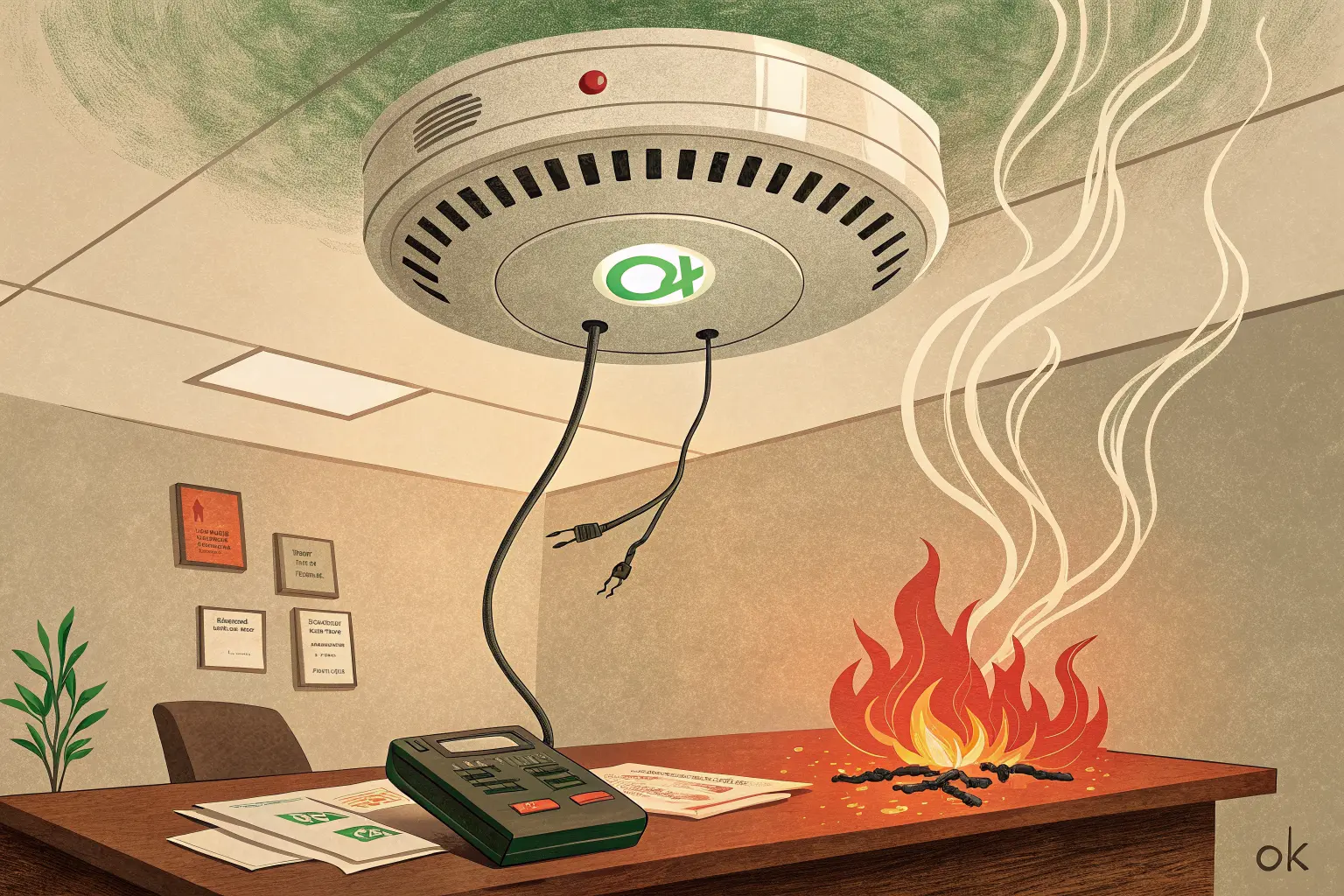
An automation that breaks loudly is a gift. It throws a red error, an email hits your inbox, something stops moving, and you know within the hour that you have a problem. That is the polite failure. You will curse at it for twenty minutes and then fix it. The failure that actually costs you money is the quiet one: the machine that keeps running, keeps showing a green light, and stopped doing its job three weeks ago without telling a soul.
I build automations for small businesses, so let me describe the one that keeps me up. You set up a system that emails you every time someone fills out the contact form on your site. It works. You test it, the lead lands in your inbox, you move on with your life. Then some Tuesday a customer calls, a little annoyed, and mentions they filled out your form almost a month ago and never heard back. You check. There are no leads in your inbox because there have been no emails, because a key rotated or a quota filled or a service returned a silent 401, and every single lead since then dropped into a hole in the floor. Nothing crashed. The site looked fine. The form even said "thanks, we'll be in touch." It just quietly stopped being true.
Here is the part the vendor did not mention when they sold you the automation. The moment you automate a task, you stop doing it by hand. That is the entire point. But it also means you stop being the person who would have noticed it wasn't getting done. Before the automation, if the leads stopped coming, you would feel the silence. After it, the silence looks exactly like success. You have removed the only human who was watching, and you have replaced them with a green light that does not actually know whether anything happened.
A machine that fails loudly is a tool. A machine that fails silently is a liability with a status light.
Silent failure has a hundred faces and I have met most of them. The automation that fires twice because the trigger got confused, so now you have duplicate records and a customer getting two of every email. The free-tier cap you didn't know you had, so in month four the thing just stops writing new rows and never says why. The deploy dashboard that flashed "success" a full twenty seconds before the code actually reached the server, so the test you ran right after was cheerfully testing the old version. None of these announce themselves. They all wear the same green light as the version that works.
And here is why you were never sold the fix. Monitoring is the unglamorous half of every automation. It does not demo well. You cannot put "and here's the part that emails you when it breaks" in a sales deck next to the shiny thing that writes the emails, because admitting the machine can break undercuts the whole pitch. So it gets left out. You pay for the half that feels like magic and you go home without the half that saves you, and you don't find out which half you needed until a customer finds out for you.
So here is the one question to ask before you sign anything with the word automation in it. Not "does it work." Everything works in the demo, that is what a demo is. Ask: "How will I know the day this stops working, without a customer telling me first?" Then shut up and watch their face. If the honest answer is some version of "you'll notice," you are being sold a machine designed to fail quietly, and you should keep your money. If the answer is a real one, a heartbeat check, a daily digest, an alert that fires when the thing that should happen doesn't, then you are talking to someone who has actually run one of these in the wild instead of just clicking through it once on stage.
That question is also the fastest way to sort the practitioners from the presenters. A vendor who brings up monitoring before you do has been burned before, which is exactly the person you want building something you plan to stop watching. A vendor who looks surprised by the question has only ever seen these things work. Guess which one is about to become your problem.
I will say the thing nobody selling this says out loud. The automation is the easy half. Getting a machine to do the task is close to a solved problem now. The hard half, the half that actually protects your business, is the alarm that tells you the day the machine goes quietly wrong, and that half is the one that never makes it into the quote. Ask for it by name. If they can't sell it to you, they haven't really built one.