The Third Subscription
The tool was one price. The working version needed two more companies to carry its messages, and nobody quoted you for either.
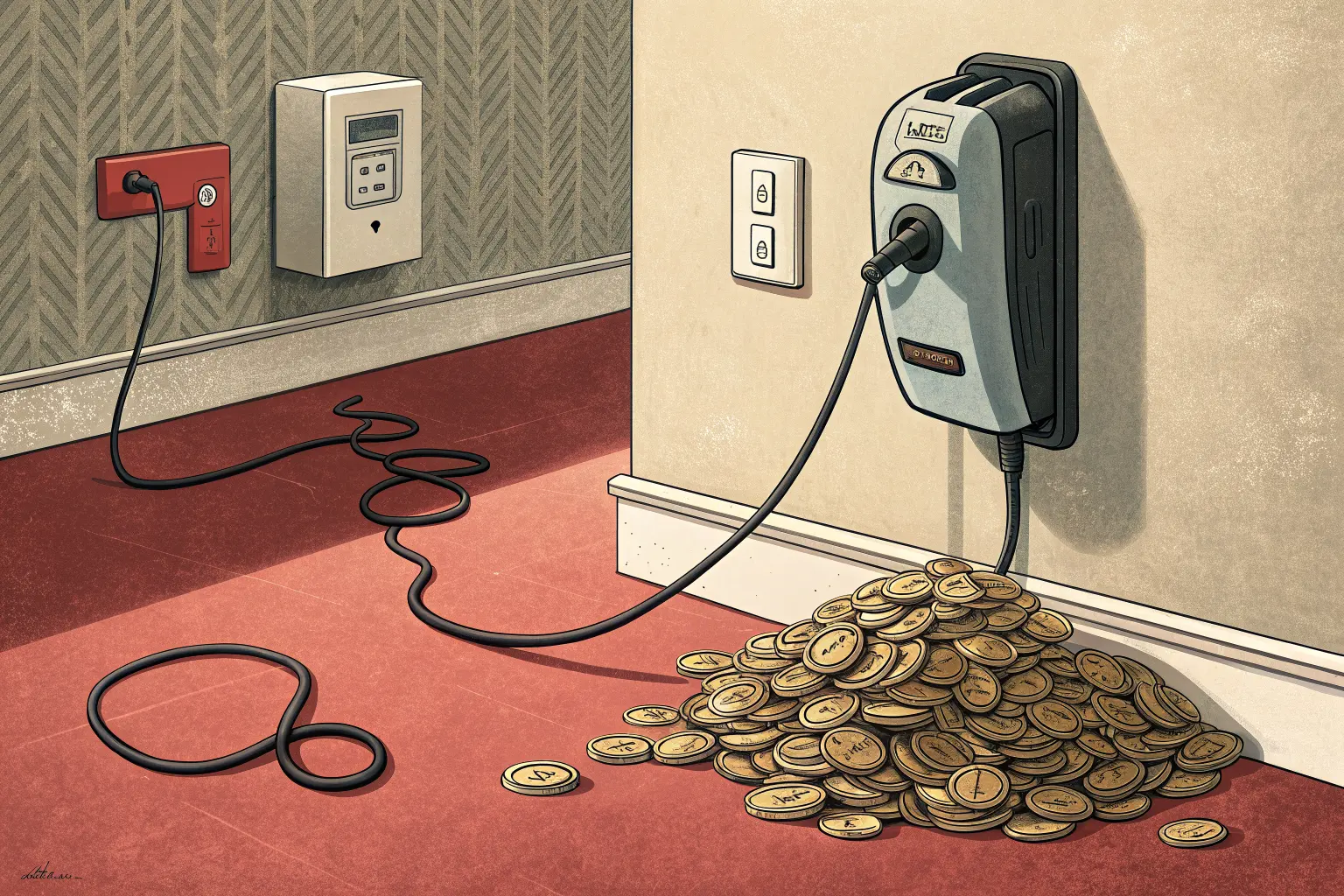
A guy who runs a small shop forwarded me a pricing page last month. Forty-nine dollars a month for an AI tool that promised to "connect your whole operation." He wanted to know if it was a good deal. I told him the tool was fine. Then I told him the forty-nine was the smallest number he was ever going to pay for it, and I watched his face do the thing faces do when the honest answer is the unwelcome one.
The word doing the lying is "integrates." On the demo, integration looks like physics. There's the AI box on the left, your accounting software on the right, a clean line drawn between them, a little green checkmark. Two things that snap together like Lego. Except that line isn't a law of nature. That line is a company. Somebody built it, somebody hosts it, and somebody is going to bill you to keep the message moving across it.
Here's how it actually runs. The AI tool watches for a new lead. Good so far. But it doesn't talk to your booking calendar directly, because almost nothing talks to anything directly. It talks through a middleman, usually Zapier or Make, or a "native integration" that's a thin wrapper on the exact same plumbing. And the middleman bills by the task. Every lead that comes in is a task. Every step in the flow is another task. A shop running two thousand leads a month burns through the free tier in week two and lands on a plan that quietly costs more than the AI did.
That's only one end of the line. The other end has a meter too. QuickBooks, Google, your CRM, your phone system, every one of them rate-limits or paywalls the door your automation keeps knocking on. Intuit sets the API tier. Google sets the quota. You don't control either vendor, and neither one has ever heard of you or the little automation you're running against them. The forty-nine-dollar tool is a tenant in two buildings it doesn't own, and both landlords charge rent.
"Integrates with QuickBooks" doesn't mean it talks to QuickBooks. It means someone, probably you, will pay a third company to carry the message.
So when a marketing page brags that it "connects to 5,000 apps," read that for what it is. That's not a feature count. That's a count of how many other companies get to put a meter on you. The longer the integration list, the more landlords, not fewer.
Nobody prices this at the sale, because it wrecks the sticker. Forty-nine sells. "Forty-nine, plus about eighty in plumbing, plus whatever Intuit feels like charging this quarter" does not sell. So the plumbing gets left off the slide and discovered in month three, when the task limit trips and the automation just stops, and now you're logged into a billing portal for a company you didn't know you were a customer of, raising your own limit so your own leads start flowing again.
I build these flows for real money, so I'll tell you how I quote them. The honest version isn't one line. It's the tool, the middleware tier it actually needs at the client's volume, and a note about which upstream services can move the math without asking me first. It makes my number look bigger than the vendor's. Every single time. I write it that way anyway, because the alternative is being the guy who quoted forty-nine and delivered a surprise bill, and that guy doesn't get the referral.
It also breaks the math everyone waves around. The vendors love to say payback lands in thirty to ninety days. Maybe it does. But that math runs on the sticker, not the stack. If the thing you were quoted is half of what the working system actually costs, your payback window just doubled, and the pilot you green-lit on a napkin got green-lit on the wrong number.
So before you sign anything that "integrates," ask one question and make them put the answer in writing. The day this is running at my volume, name every company I'm paying, with the tier. All of them. The AI vendor, the middleman, the upstream services it leans on. If they can't produce that list, they've never deployed this thing at your scale, and the demo you watched was running on somebody else's bill.
The sticker is the cover charge. The subscriptions stacked behind it are the tab, and the tab is where they actually make their money on you. Find out who else is holding a meter before you plug anything in.