You're Not in the Loop. You're the Airbag.
"Human in the loop" sounds like oversight. It's insurance. When the model is wrong, you're the name that signed off.
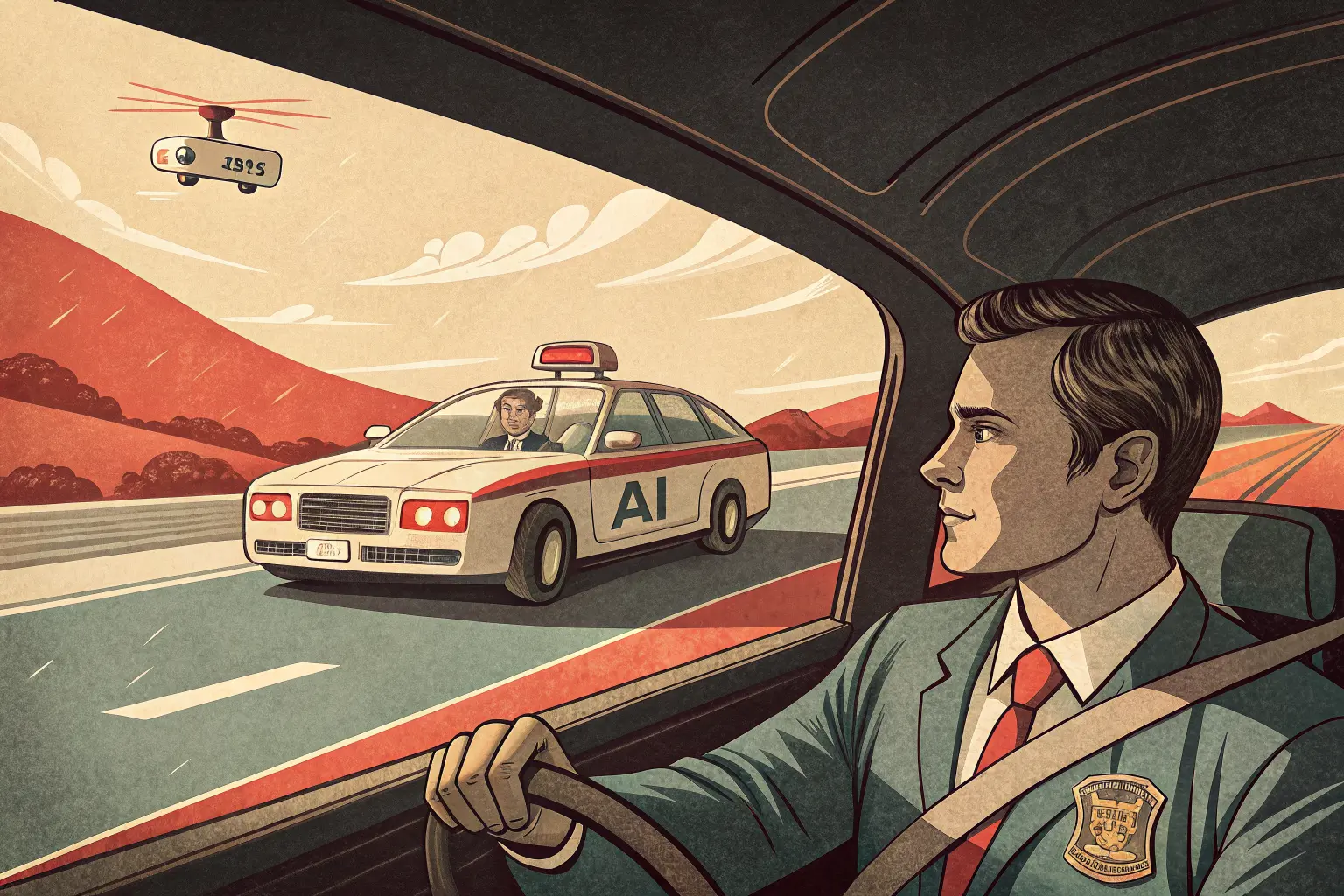
Every enterprise AI pitch lands on the same soothing line. "Don't worry, there's always a human in the loop." Everybody in the room exhales. It sounds like a seatbelt. It sounds like somebody responsible is watching the machine so the machine can't hurt anyone. That is exactly what it is designed to sound like. It is not what it does.
Walk downstream from the slide and look at the actual human. They are staring at a queue. The model has already scored the loan, flagged the resume, drafted the denial, coded the diagnosis, ranked the applicants. Their job is to click approve. Not to redo the work, not to re-run the numbers, just to put a wet signature under a decision a system already made. On a good day they get thirty seconds per item and two hundred items. Nobody is auditing anything at that pace. They are laundering it.
And here is the cruel part the vendors never mention. Humans are catastrophically bad at supervising automation that is right most of the time. This is old, settled research from aviation and manufacturing, decades before the word "AI" got hot. When a system is correct in ninety-five cases out of a hundred, the watcher stops watching. Attention decays. Trust calcifies. The one case that needed a human is the exact case the human waves through, because four hundred boring correct ones trained them to. Reliability doesn't create vigilance. It kills it.
The loop isn't there to catch the machine's mistakes. It's there to catch the blame for them.
So why keep the human at all, if the human isn't really checking? Because the human is the point. Researchers have a name for this role: the moral crumple zone. When an automated system fails, the person nearest the controls absorbs the impact, legally and reputationally, even though they had no real capacity to prevent it. The Tesla driver with "hands on the wheel." The nurse who "confirmed" the algorithm's dosage. The analyst who "reviewed" the model's flag. The technology gets the productivity. The person gets the liability. That is not a bug in the design. That is the design.
Follow the risk and you can see it move. The vendor sells the model but disclaims the outputs, because there's a human in the loop, so it's not their fault. The company buys the model but disclaims the outputs too, because there's a human in the loop, so it's not corporate policy, it's operator error. Everybody upstream gets to point at the one person downstream who clicked the button they were told to click as fast as possible. The loop is a plumbing diagram for accountability, and it all drains to the cheapest seat.
The tell is whether the human can actually say no. Give someone a queue, a quota, a boss who reads overrides as insubordination, and a model that's right often enough to make caution feel paranoid, and you have not put a human in the loop. You have installed a crumple zone with a payroll number. They can't steer. They can't brake. They exist to deploy on impact and spread the damage across a body so the expensive parts of the machine walk away clean.
If your AI plan depends on a human in the loop, ask the only question that matters. Can that human realistically override the machine, with the time and the authority and the cover to do it, and not get punished for slowing the line? If yes, good, that's oversight. If no, stop calling them a safeguard. Call them what they are. And if the person in that seat is you, understand the job you actually accepted. You're not driving. You're the thing that goes off when it crashes.